
HVAC Limit Switch Diagnostics: Should Continuity NC Be OL During Heat Exchanger Tripped Conditions?
Ever found yourself staring into the dark, mechanical belly of a gas furnace on a freezing Tuesday night? The home is dropping temperature fast, the homeowner is hovering over your shoulder offering unsolicited advice, and your multimeter is reading something that just does not make sense. We have all been there. Diagnostics can feel like a game of high-stakes chess when a system shuts down out of nowhere, especially when dealing with the main high limit circuit.
The safety circuit is the unsung hero of residential heating. When things get too hot inside that plenum, this little bimetallic component steps in to save the heat exchanger from turning into a melted heap of metal—or worse, causing a catastrophic house fire. But diagnosing it properly requires a rock-solid understanding of electrical states. Specifically, you need to know what happens to a normally closed limit switch when heat goes off the rails.
Let us settle the debate right now. If your furnace is acting up, understanding how to test a limit switch using a basic multimeter is the absolute fastest way to separate a real mechanical failure from a simple airflow issue. Grab your meter, dial it to resistance, and let us dive into the nitty-gritty of safety circuit troubleshooting.
Honestly? It is much simpler than most technicians make it out to be once you visualize the internal mechanics.
Understanding the Basics of HVAC Limit Switch Architecture
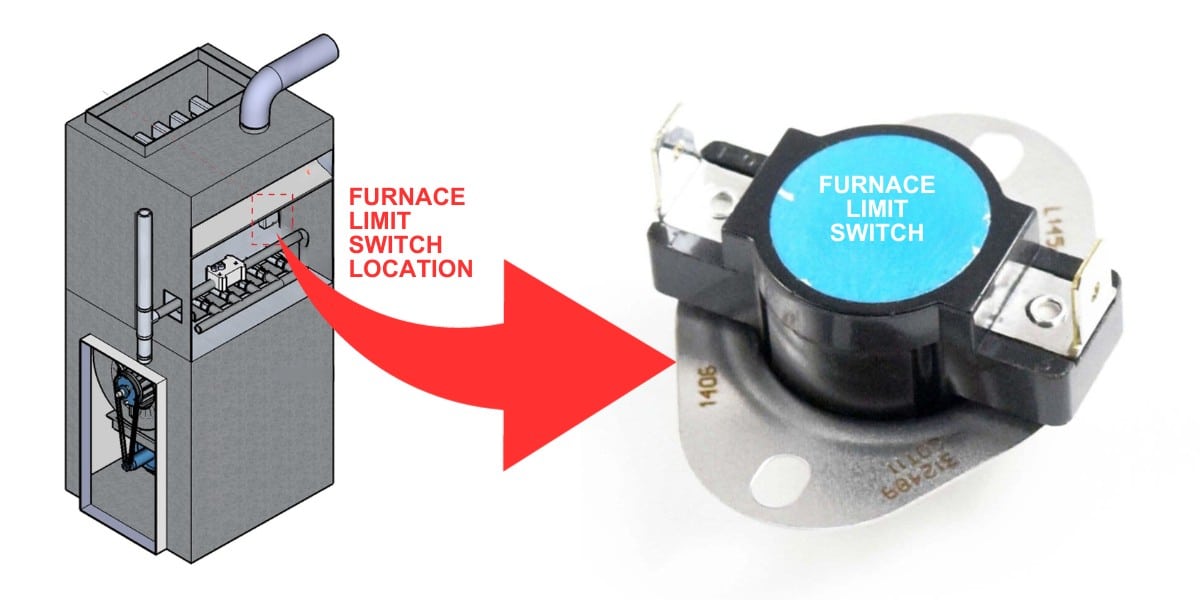
Before we jump into reading digital multimeters, we need to get on the same page about how these tiny devices are built. A standard high limit switch is a thermal-magnetic or bimetallic safety device designed to monitor heat exchanger temperature. In its resting, cool state, it maintains a physical connection. This means it is designed as a normally closed switch.
Why normally closed? Safety engineering 101. If a wire vibrates loose, breaks, or corrodes, an open circuit immediately alerts the integrated furnace control board to shut off the gas valve. If the industry used normally open switches that closed upon heating, a snapped wire would mean the furnace could run continuously without any high-temp protection! That would be a complete nightmare.
Inside the switch sits a small bimetallic disc composed of two different metals bonded together. Because these metals expand at vastly different rates when exposed to thermal energy, heat causes the disc to snap backward, physically popping the electrical contacts apart. It is a brilliant, simple mechanical reaction that requires zero external power to operate.
When everything is operating normally, electricity flows across those contacts without any resistance. The control board sees a closed loop, knows the heat exchanger is operating within safe thermal parameters, and allows the gas valve to remain energized. Simple, right?
The Role of Normally Closed (NC) Contacts in Safety Circuits
In a standard 24-volt HVAC control loop, the high limit switch is wired in series with other primary safety controls. This means the 24VAC signal travels straight through each switch like links in a chain. If any single link breaks, the entire chain drops voltage, instantly cutting power to the main gas valve while keeping the indoor draft inducer or blower fan running to cool down the cabinet.
Because the switch is normally closed NC under ambient room temperatures, current passes through it continuously during a normal call for heat. You could think of it as a toll bridge where the gate is always down to let traffic cross, only lifting to block cars when an alarm sounds. If that gate stays open when it should be down, nothing moves downstream.
It is important to remember that these components are precision-calibrated from the factory. A switch rated for 180 degrees Fahrenheit will snap open the instant the surrounding air hits that specific threshold. Once it cools down by 30 or 40 degrees, the disc snaps back into its resting state, restoring the electrical path.
Understanding Resistance: What OL Really Means on Your Multimeter
Let us talk about your diagnostic tools for a second. When you switch your multimeter over to the Ohms setting to measure resistance, you are essentially asking the meter to send a tiny voltage through one lead and measure what comes back through the other. If the path is wide open and uninterrupted, resistance is practically zero.
However, when the path is broken—like a severed wire, a popped switch, or simple thin air—the meter cannot pass any current between the probes. To display this infinite resistance, most modern digital meters display the letters "OL", which stands for Open Loop or Over Limit. It means there is zero electrical continuity.
Seeing "OL" on your screen can either be a relief or a massive red flag, depending entirely on what state the system is currently in. If you expect a path to be open, "OL" is your best friend. If you expect a complete circuit, seeing those two letters means you just found your culprit.
Tripped Conditions: Should Continuity Read OL During an Overheat Event?
Now we arrive at the core question that trips up green technicians and DIYers alike: During an actual heat exchanger overheat trip, should your limit switch continuity reading show OL on a normally closed component? The short answer is an absolute, resounding yes. When a heat exchanger tripped state occurs, an OL reading is exactly what you want to see on that switch.
Look at it this way—if the heat exchanger gets dangerously hot, the bimetallic strip inside the limit switch flexes and snaps open. That physical separation stops electrical current dead in its tracks. Therefore, if you pull the wires off the switch while it is still hot from a trip and check across the terminals with an ohmmeter, the meter MUST read OL resistance.
If you test a switch during a known overheat event and your meter reads zero ohms (0.00 &#Omega;), that switch has mechanically welded itself shut. That is a dangerous, failure mode. A switch that remains closed during an over-temperature event fails to shut off the gas, putting the entire heating system at risk of total thermal destruction.
So, to re-emphasize: during an active high-temperature excursion, a functional normally closed limit switch MUST open up, resulting in an "OL" reading across its isolated terminals. Anything else means the switch is broken.
Step-by-Step Diagnostic Workflow for Tripped Limits
- Safety First: Turn off the main electrical disconnect switch to the furnace before pulling any wires or touching internal components. Never check resistance on a live circuit, or you will fry your meter’s internal fuse!
- Isolate the Component: Disconnect at least one of the spade connectors attached to the high limit switch terminals. Leaving the wiring harness attached can cause false continuity readings through the control board.
- Set Your Meter: Set your digital multimeter to the Resistance/Ohms (Ω) setting or the audible Continuity setting.
- Measure the Terminals: Touch one probe to each spade terminal on the switch. If the switch is currently hot and tripped, your meter should display "OL". If the switch has cooled back down to room temperature, it should display close to 0.0 Ω (typically 0.1 to 0.4 Ω accounting for lead resistance).
- Test for Ground Faults: Check resistance between each terminal and the sheet metal chassis of the furnace. You should get an "OL" reading on both terminals to ground. Any low reading indicates an internal short to ground.
Distinguishing Between Auto-Reset and Manual-Reset Limit Switches
Not all limit switches act the same after they trip. Standard primary limit switches mounted directly above the heat exchanger are almost always auto-reset. Once the inducer blower pulls enough room air through the cabinet to cool the bimetallic disc down, it snaps back shut automatically, clearing the "OL" reading back to 0.0 Ohms.
On the flip side, secondary limits, rollout switches, and burner box safety switches are often manual-reset types. These feature a small red button protruding from the back of the plastic housing. When an extreme thermal event occurs, the internal contacts snap open ("OL") and stay locked open forever until a human physically presses that red button back down.
If you are testing a manual-reset furnace limit switch that reads "OL" even when the furnace is ice cold, do not condemn it immediately! Try pressing the manual reset button until you hear a sharp click. Measure continuity again. If it drops back down to zero ohms, the switch is mechanically fine, but you still need to find out why it tripped in the first place.
Root Causes: Why Is Your Heat Exchanger Tripping the Limit?
Here is a golden rule of HVAC service: Switches rarely die of old age; they are usually murdered by bad operating conditions. Replacing a tripped HVAC safety switch without fixing the underlying problem is just a temporary band-aid. The new switch will trip just like the old one did.
When a heat exchanger overheats, it is almost always an airflow problem. A residential gas furnace relies on a delicate balance between thermal input (BTUs of gas burned) and medium airflow (CFM of air pushed by the blower motor). If you choke off the airflow, heat builds up instantly, driving furnace plenum temperatures past the safe limit.
Let us break down the most common real-world causes of high limit trips in modern high-efficiency and standard gas furnaces.
Airflow Restrictions: The Primary Culprit
Nine times out of ten, a tripped high limit leads right back to a severe lack of airflow across the heat exchanger. It is shocking how often a furnace failure is caused by a simple five-dollar air filter that hasn’t been changed since the previous administration.
- Filthy Air Filters: High-MERV pleated filters loaded with pet hair, dust, and drywall debris act like solid brick walls against airflow.
- Closed or Blocked Supply Vents: Homeowners often close off supply registers in unused rooms thinking it saves money. In reality, it starves the system of CFM, spikes static pressure, and trips the main limit.
- Dirty Evaporator Coils: If the furnace has central air conditioning, a mat of grime on the underside of the indoor A-coil acts like a massive airflow plug sitting directly above the heat exchanger.
- Undersized Ductwork: A furnace pushing 1200 CFM through a return duct system designed for 800 CFM will constantly run hot, leading to premature limit switch failure.
Mechanical and Component Failures
If the ductwork and filters are clean as a whistle, it is time to inspect the mechanical components responsible for moving air and generating heat. Mechanical failures require a bit more digging with your diagnostic tools.
- Failing Blower Motor: A run capacitor that has dropped out of tolerance can cause the blower motor to run at half its rated RPM. The motor gets hot, loses torque, and fails to move enough air.
- Dipped Blower Wheel Vanes: Dirt accumulation on the curved fins of a squirrel-cage blower wheel can cut fan efficiency by over 30%, leading to slow heat transfer.
- Over-Firing the Burners: Excessive manifold gas pressure generates far more BTUs than the heat exchanger was engineered to handle. Always clock the gas meter to verify firing rate!
- Cracked Heat Exchanger: A cracked or breached primary heat exchanger alters the flame pattern, causing hot spots that radiate intense heat directly onto the high limit switch body.
Common Questions About HVAC Limit Switch Diagnostics
How do I know if my furnace limit switch is stuck open?
Turn off power to the furnace, disconnect the wires from the switch, and measure resistance across the terminals using an ohmmeter while the furnace is completely cold. If your meter displays "OL" (Open Loop) when the switch is cold, the internal contacts are stuck open, and the switch must be replaced.
Can I temporarily bypass a high limit switch for testing?
You can temporarily jumper a limit switch using a wire with alligator clips strictly to confirm an electrical diagnosis while standing right in front of the unit. However, you must NEVER leave a jumper wire installed on a furnace unattended. Bypassing a safety switch can cause severe overheating, cracked heat exchangers, or fires.
What should voltage read across an open vs closed limit switch?
When measuring live 24VAC control voltage with the furnace powered on: a CLOSED switch will read 0 VAC across its two terminals because there is no potential difference. An OPEN (tripped) switch will read approximately 24 VAC across its terminals because the electrical path is broken, creating a voltage drop.
Why does my new limit switch keep tripping after replacement?
If a new switch trips, the switch itself is doing its job correctly by responding to an actual overheat condition. The problem lies with airflow or combustion. Check for a dirty air filter, blocked return vents, a failing blower motor capacitor, a clogged evaporator coil, or excessive gas pressure at the manifold.