
Industrial Facility Energy Audit: What Does CT Stand for on an Electricity Meter Reading with Multiplication Multipliers
Ever walked into the main electrical room of a massive manufacturing plant, popped open a metering cabinet, and felt a sudden wave of confusion? You look at the digital readout, write down a number, and then your lead engineer tells you, "Now multiply that by 80." Wait, what? Why isn't the meter just telling us the actual number? If you have ever asked yourself what does CT stand for on an electricity meter reading, you are not alone. It is one of those classic initiation rights for anyone stepping into the world of industrial energy management.
Here is the short answer before we dive into the deep end: CT stands for Current Transformer. But knowing the acronym is only about five percent of the battle. In a high-voltage, high-amperage commercial setting, your standard utility meter would literally melt into a puddle of silicon and copper if you tried to run the full electrical load directly through it. That is where current transformers come into play, acting as step-down devices that reduce massive industrial currents into safe, manageable signals that standard meters can actually measure without blowing up.
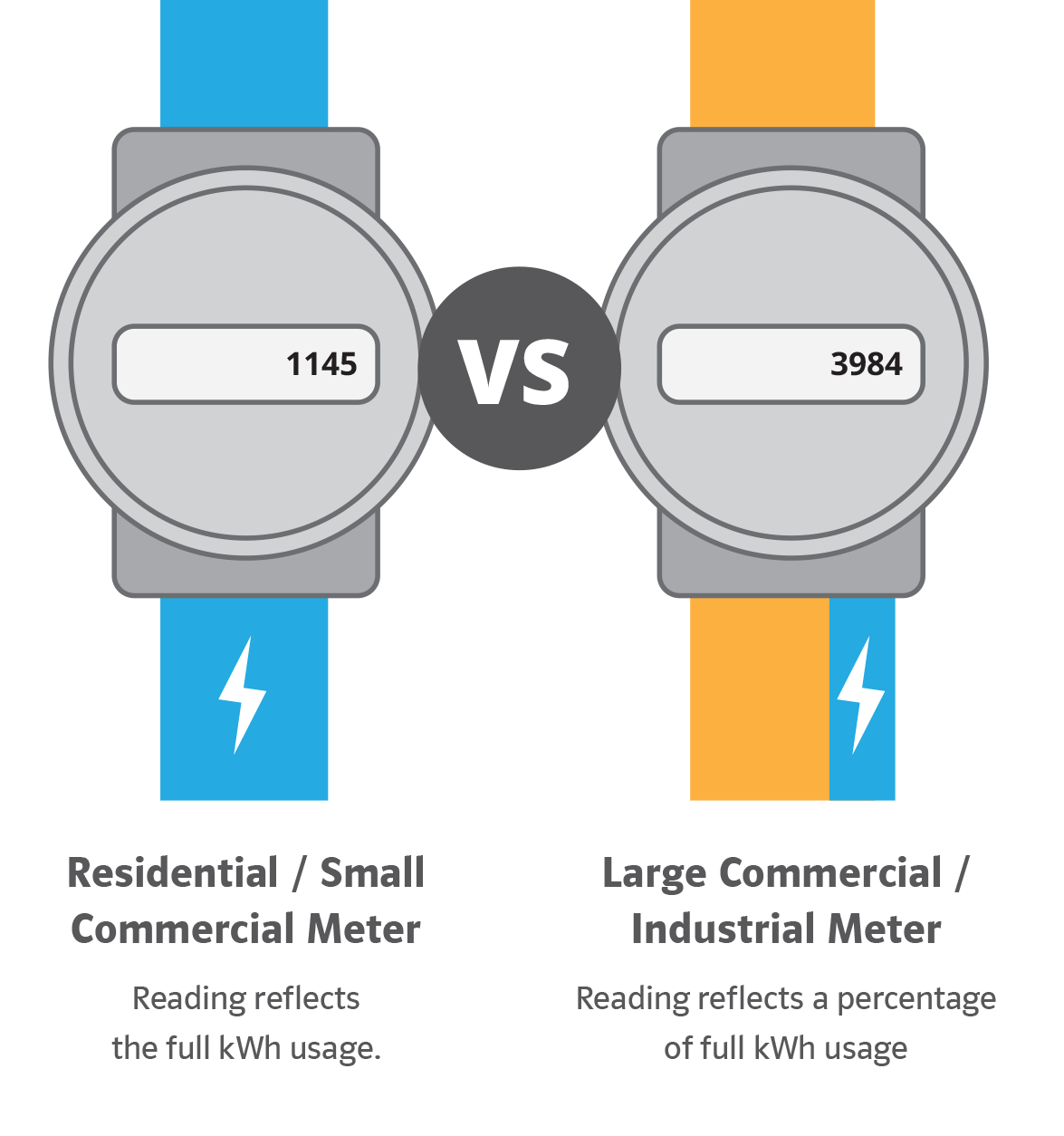
Honestly, the whole system is a brilliant piece of engineering, but it introduces a layer of math that trips up even seasoned facility managers. When your utility company installs these sensors, the numbers on the meter display no longer reflect your actual consumption in real-time. Instead, they display a scaled-down fraction. To figure out how much power your plant actually consumed, you have to apply multiplication multipliers. Miss this step during an energy audit, and your financial forecasts will be off by orders of magnitude. Seriously, it is the difference between reporting a $5,000 monthly electric bill and a $400,000 reality check.
Understanding this relationship between physical electrical loads, current transformers, and meter multipliers is the absolute bedrock of any serious facility energy audit. If you get this wrong, every energy efficiency calculation, baseline measurement, and ROI projection you make afterward is basically useless clutter. So, let's break down how this equipment works, why utilities use it, and how you can confidently calculate your facility's true energy footprint without second-guessing the math.
Demystifying the Current Transformer in Industrial Settings
The Engineering Behind Current Transformers
At its core, a current transformer is an instrument transformer designed to produce an alternating current in its secondary winding that is proportional to the AC current being measured in its primary. Look, think of it as a translator. Your facility might be pulling 2,000 Amperes at 480 Volts through massive busbars. Running a 2,000-Amp load through a glass-enclosed utility meter is a recipe for a catastrophic explosion. Instead, the CT wraps around that massive conductor, using magnetic induction to create a tiny, precise replica of that current—usually capped at standard limits like 5 Amps or 1 Amp max output.
This inductive coupling allows us to measure terrifying amounts of power from a safe distance. The primary winding is essentially the heavy-duty power line running into your building, while the secondary winding connects directly to the sensitive electronics inside the utility meter. Because the magnetic field scales linearly with the current flowing through the main line, the small signal sent to the meter is an exact ratio-based duplicate of the massive power flow driving your factory floor.
It is all about safety, cost efficiency, and physical limits. Imagine trying to build a digital utility meter with internal wiring thick enough to handle the raw power consumed by an aluminum smelter or a massive data center. The meter would be the size of a minivan and cost a fortune. By using a Current Transformer, instrument manufacturers can mass-produce standard, compact meters that work on almost any facility, regardless of how massive the actual electrical service happens to be.
Decoding CT Ratios and Nameplate Data
If you inspect the actual hardware inside your transformer cabinet, you will find a small metallic nameplate stamped with a ratio. Common industrial CT ratios include 200:5, 400:5, 800:5, or even 4000:5. What do those numbers actually mean? The first number represents the rated primary current (the maximum current flowing through your main building line), and the second number represents the secondary current output delivered to the meter when that maximum primary current is reached.
Let's take an 800:5 ratio as a practical example. This means when 800 Amps are flowing through your main power line, the CT steps that down magnetically and sends exactly 5 Amps to the electricity meter. If your machinery slows down and the primary draw drops to 400 Amps, the CT scales down proportionally and sends 2.5 Amps to the meter. The ratio remains perfectly constant across the entire operating range, assuming you stay within the transformer's accuracy class and thermal ratings.
During an energy audit, visually verifying these nameplates is critical. You cannot just assume the utility company's billing software has the correct hardware ratio programmed into their system. Human errors happen. Utilities sometimes swap out blown CTs during emergency repairs and forget to update the account's billing multiplier in their central database. Finding a mismatch between the physical CT nameplate in the field and the billing multiplier on your monthly invoice can instantly unlock tens of thousands of dollars in billing refunds for your facility.
Potential Transformers: The Hidden Half of the Equation
While we are focusing heavily on current, we cannot completely ignore voltage. In medium-voltage and high-voltage industrial setups—like facilities receiving power at 13.8 kV or 69 kV—utility meters cannot handle those extreme voltage levels directly either. In these high-leg scenarios, engineers install Potential Transformers (PTs), which are sometimes called Voltage Transformers (VTs). These devices step down high voltages to a standard standard secondary voltage, typically 120 Volts, for the meter to process safely.
When both CTs and PTs are installed on a single service line, the overall scaling factor increases dramatically. The total system multiplier becomes a combination of both the current reduction ratio and the voltage reduction ratio working together. If your facility operates on standard low voltage (like 480V/277V or 208V/120V), you will usually only deal with CTs, as the meter can measure the line voltage directly without needing step-down voltage transformers.
Neglecting the voltage component in medium-voltage audits is a recipe for disaster. If your meter measures voltage through a 14,400V to 120V potential transformer (a 120:1 ratio) alongside an 800:5 current transformer (a 160:1 ratio), your total power scale factor explodes. Understanding how these two instrument transformers interact is essential before you even start crunching baseline numbers for an ISO 50001 energy management program or an ASHRAE Level II audit.
Understanding Electricity Meter Multiplication Multipliers
Why Multipliers Are Necessary for Accurate Billing
So, how does a scaled-down 5-Amp current signal turn into an accurate kilowatt-hour (kWh) reading on your facility's bill? This is where the multiplication multiplier comes into play. Because the meter only sees a tiny fraction of the energy actually passing into your plant, the internal register only registers a tiny fraction of the total consumption. To calculate true usage, the raw difference between two consecutive meter readings must be multiplied by a specific mathematical factor.
Think of it like an odometer on a heavy vehicle that only records every tenth of a mile traveled. If the dashboard reads 100 miles at the end of a trip, you have to multiply that display value by 10 to figure out that you actually drove 1,000 miles. The electric meter operates on the exact same logic. The meter displays a manageable, smaller number, and the utility's billing algorithm (or your energy auditor's spreadsheet) scales it back up to reflect real-world physics.
This setup also prevents the digital or mechanical registers on meters from rolling over continuously. If a multi-megawatt industrial plant logged raw unscaled kWh directly on an old-school mechanical dial register, the dials would spin so fast they would wear out in months, or the digital display digits would run out of room on the screen. Multipliers keep meter hardware standard, readable, and incredibly reliable over decades of continuous operation.
How to Calculate the CT Multiplier
Calculating the baseline CT multiplier is straightforward arithmetic. You simply divide the primary current rating by the secondary current rating of the transformer. Let's work through the basic formula so you can see how simple it really is:
CT Multiplier = Primary Current / Secondary CurrentLet's run through a few real-world examples you will encounter in the field:
- 200:5 CT Ratio: 200 divided by 5 equals a multiplier of 40.
- 400:5 CT Ratio: 400 divided by 5 equals a multiplier of 80.
- 1200:5 CT Ratio: 1200 divided by 5 equals a multiplier of 240.
- 800:1 CT Ratio (Solid-State Secondary): 800 divided by 1 equals a multiplier of 800.
If your meter register advances by 150 kWh over a weekend, and your facility uses an 800:5 CT setup, your actual energy consumption during those two days isn't 150 kWh. It is 150 times 80 (the CT multiplier), which equals 12,000 kWh! That is a massive difference. Now you can see why understanding what does CT stand for on an electricity meter reading is not just academic curiosity—it is critical for keeping your operational budget accurate.
Combining CT and PT Multipliers for Total Power Calculations
What happens when your service includes both Current Transformers and Potential Transformers? The math stays simple, but the multiplier gets significantly larger. To find the overall Billing Multiplier (sometimes called the Overall Meter Constant), you simply multiply the CT ratio by the PT ratio.
Let's calculate a medium-voltage industrial service setup step-by-step:
- Determine the CT Ratio: You inspect the CTs inside the switchgear cabinet and find they are rated at 600:5. Dividing 600 by 5 gives you a CT Multiplier of 120.
- Determine the PT Ratio: You check the voltage transformers step-down rating, which reads 4160V to 120V. Dividing 4160 by 120 gives you a PT Multiplier of 34.67.
- Calculate the Total Overall Multiplier: Multiply the CT factor by the PT factor:
120 * 34.67 = 4,160.4.- Apply to Meter Delta: If your physical meter display moves by 10 units over a billing cycle, your plant actually consumed:
10 * 4,160.4 = 41,604 kWh.Look, it is easy to see how a missing PT multiplier in your audit calculations could ruin an energy model. If you forget to multiply by that 34.67 factor, you will underestimate your plant's energy usage by over 97 percent! Always double-check whether the meter display is already programmed to factor in PTs internally, or if you need to manually apply the voltage scaling factor to your raw dial readings.
Step-by-Step Energy Audit Procedures for CT-Metered Systems
Field Inspection: Locating and Reading Physical Hardware
When you start an industrial energy audit, leave your desk and head straight to the electrical service entrance. You need to physically inspect the service enclosure. Put on your required Personal Protective Equipment (PPE) before opening any cabinet doors. Safety comes first. Always. Once inside the metering cabinet, locate the CTs mounted around the primary incoming phase conductors (A, B, and C phases).
Look for the nameplate attached to the body of each CT. Write down the primary and secondary current ratings, the accuracy class (e.g., 0.3% accuracy class is standard for utility revenue metering), and the burden rating. Take clear, high-resolution photographs of these nameplates if safety protocols allow it. You will need these photos later to cross-reference with the utility company's monthly billing invoices.
Next, move over to the actual electricity meter display. Modern smart meters (AMI meters) often auto-scroll through multiple screens. You will see codes like "001" for total cumulative kWh, "002" for peak kW demand, and "003" for reactive power (kVARh). Record the exact numbers on the screen along with their specific display codes. Make a note of whether the meter faceplate explicitly states "Direct Read" or if it clearly lists a "Meter Multiplier = X."
Comparing Field Multipliers vs. Utility Invoices
Once you are back at your desk, pull the last 12 to 24 months of utility bills for the facility. Look closely at the line items. Somewhere on that bill, usually near the meter reading table, you will see columns labeled "Previous Reading," "Current Reading," "Difference," "Multiplier," and "Billed Usage."
Compare the physical hardware multiplier you calculated in the field directly against the multiplier printed on the utility bill. In an ideal world, they match perfectly. But guess what? Out in the real world, errors happen more often than utility companies like to admit. Here are three common real-world discrepancies to look out for during your audit:
- The Unadjusted Swap: The utility replaced a damaged 400:5 CT (multiplier of 80) with a new 800:5 CT (multiplier of 160) during an outage, but the billing department never updated the account multiplier in their software. Result? The facility is being billed for only half of the energy it actually consumes. (Warning: When the utility discovers this, they will back-bill you for the difference!)
- The Double-Multiplier Error: The new digital smart meter installed by the utility was pre-programmed internally to apply the 80x CT multiplier to its digital screen display. However, the utility billing software is ALSO multiplying that reported number by 80 on the monthly invoice. Result? The customer is being overbilled by a factor of 80x!
- Direct-Read Misunderstandings: Assuming a modern meter requires a manual multiplier when it has already been internal-programmed as a "Direct Reading" meter by the meter shop.
Catching these errors is where an energy auditor truly proves their worth. Finding a double-multiplier error can immediately secure a massive cash refund for your client or employer, making you look like an absolute hero before you have even recommended a single LED light retrofit or VFD installation.
Calculating Demand Charges (kW) vs. Consumption (kWh)
Current transformers do not just scale down total energy consumption (kWh); they also scale down peak power demand (kW). Commercial and industrial utility bills are split into two primary charges: consumption (how much total energy you used over the month) and demand (the highest rate at which you pulled that energy during a short 15-minute window).
When reading peak demand directly from an unscaled meter screen, you must apply the exact same CT multiplier to the demand reading as you do to the consumption reading. Let's take a look at how this impacts your financial bottom line:
Real Peak Demand (kW) = Meter Displayed kW * CT MultiplierIf your digital meter screen registers a peak demand value of 12.5 kW during the month, and your facility uses a 600:5 CT setup (multiplier of 120), your actual peak demand was:
12.5 * 120 = 1,500 kW. At a typical industrial demand rate of $15 per kW, that 1,500 kW peak costs the facility $22,500 per month in demand charges alone! Understanding how CT multipliers interact with peak 15-minute demand windows gives you the insights you need to implement targeted load-shedding and peak-shaving strategies.
Common Questions About Industrial CT Electricity Meters
What does CT stand for on an electricity meter reading?
CT stands for Current Transformer. It is an instrument transformer used in commercial and industrial electrical systems to step down high electrical currents to a lower, safer level that can be directly measured by an electricity meter.
How do I know if my meter reading needs to be multiplied?
Check the faceplate of your physical electricity meter and your monthly utility invoice. If the meter cabinet contains current transformers, your raw meter reading usually requires a multiplier. Look for a field labeled "Meter Multiplier," "Multiplier," or "CT Ratio" on your utility bill, or check if the meter face explicitly says "Direct Reading."
What is the difference between a CT ratio and a meter multiplier?
The CT ratio represents the relationship between primary incoming current and secondary output current (e.g., 400:5). The meter multiplier is the mathematical factor derived from that ratio used to scale raw readings (e.g., 400 divided by 5 equals a multiplier of 80).
Can a digital smart meter display direct readings even if CTs are installed?
Yes. Many modern electronic smart meters (AMI meters) can be internally programmed by the utility to automatically calculate and display scaled, direct-read values. In these setups, the internal software applies the CT multiplier before rendering the number on the digital screen, eliminating the need for manual multiplication during visual inspections.